



Volatility changes the way organizations operate, but it also reveals the quality of leadership behind them. When markets become unpredictable, confidence weakens, and long-term plans are suddenly questioned, leaders face a different challenge: they must create clarity without pretending to have certainty.
Periods of instability are uncomfortable by definition. Yet they can also expose opportunities that remain invisible when conditions are easy. The leaders who navigate them well are not necessarily the ones with the best forecasts. They are the ones who can remain clear-headed, adaptable, and useful while circumstances continue to change.
Avi-Meir Zaslavsky believes that uncertainty should be treated as a leadership test rather than simply a business threat.
“Volatility does not create the weaknesses of an organization; it reveals them. When conditions are stable, poor decisions can remain hidden behind favorable circumstances. When uncertainty increases, leadership becomes visible in the way people prioritize, communicate, respond to pressure, and continue creating value despite what they cannot control.”
Here are five principles that can help leaders navigate that environment more effectively.
When circumstances become unpredictable, the natural reaction is to focus on everything that might go wrong. Leaders can become consumed by external events, constantly reacting to new information while losing sight of what the organization can actually influence.
The more effective approach is to separate uncertainty from responsibility. You may not control economic conditions, competitors, political developments, or changes in customer behavior, but you can control the quality of your decisions, the way your team responds, and how quickly the organization adapts.
This is also where leadership becomes most visible. Difficult conditions create an opportunity to ask a more productive question: What can we build, improve, or solve because of the situation we are facing?
Instead of allowing volatility to narrow the organization's thinking, strong leaders use it to sharpen priorities and find new ways to create value.
Fear is a normal response to uncertainty, but unmanaged fear can quietly distort leadership.
It encourages short-term thinking, defensive decisions, excessive control, and an instinct to blame external circumstances. Leaders may begin communicating from anxiety rather than judgment, and their teams quickly pick up on that emotional signal.
The goal is not to eliminate fear. It is to become aware of it without allowing it to dictate behavior. Reflection, deliberate pauses, honest conversations, and time away from constant information can help leaders distinguish between a genuine risk and an emotional reaction to uncertainty.

Avi-Meir Zaslavsky emphasizes the importance of this internal discipline:
“A leader does not need to feel fearless to create confidence for others. What matters is the ability to recognize fear without allowing it to take control of the decision-making process. When you can examine your own reaction before acting on it, you create space for better judgment—and that space becomes extremely valuable during periods of volatility.”
The leader's emotional state inevitably influences the organization. Managing yourself is therefore part of managing the business.
Volatility creates an endless stream of information. News updates, market movements, forecasts, social media commentary, internal messages, and competing opinions can make it feel as though every development requires an immediate response.
It does not.
Leaders need enough information to understand the environment, but constant exposure to negative information can consume the mental energy required to actually lead. The objective is not to disconnect from reality. It is to remain informed without becoming psychologically trapped inside the news cycle.
Perspective matters just as much. Economic and geopolitical uncertainty may feel unique while you are living through it, but organizations and societies have repeatedly experienced periods of disruption, contraction, conflict, and transformation. History does not provide a precise forecast, but it can remind leaders that difficult periods eventually change.
Protecting your energy allows you to stay useful when other people are becoming overwhelmed.
Periods of instability often expose weaknesses that were easy to ignore during prosperous times.
A business model that worked extremely well under one set of conditions may no longer be sufficient. Customer expectations change, costs move, technologies evolve, and competitors find new ways to operate. The temptation is to protect the existing formula at all costs, but that can make the organization less adaptable precisely when adaptability matters most.
Volatility can therefore become a forcing function for innovation.
Leaders should examine what customers now struggle with, where existing solutions are becoming outdated, and which assumptions the organization has been treating as permanent. Some of the most valuable opportunities emerge when an old problem becomes more urgent or when an established industry becomes less capable of serving its customers effectively.
The question is not simply how to survive disruption. It is how to emerge from it with a stronger business.
Long periods of uncertainty can make personal development feel secondary to immediate business concerns. In reality, the opposite is often true.
Leaders need stronger thinking, broader knowledge, greater resilience, and better physical and emotional capacity when the environment becomes more demanding. Reading, learning, exercising, recovering properly, spending time away from constant stimulation, and maintaining meaningful relationships are not distractions from leadership. They support the capacity required to perform it.
At the same time, the strongest response to uncertainty is often to become more useful. Improve your expertise. Improve your products. Improve the customer experience. Help your team become more capable. Find problems that matter and solve them better than before.
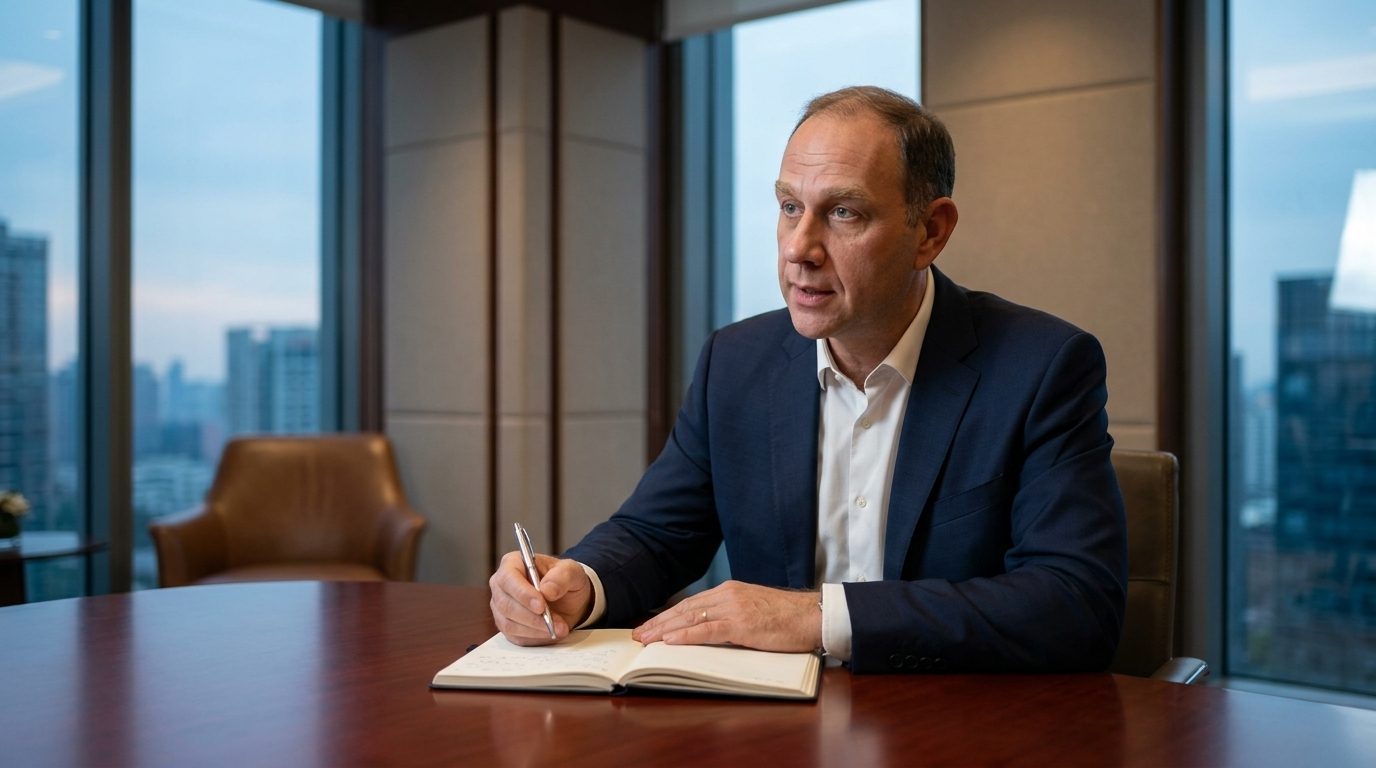
Avi-Meir Zaslavsky points to this connection between personal growth and organizational value:
“The most productive response to a volatile environment is not to spend all of your energy predicting what will happen next. It is to increase your capacity to respond well to whatever happens. Keep learning, strengthen your health, deepen your expertise, and become more valuable to the people you serve. The stronger you become as a leader, the more options your organization has when circumstances change.”
Volatility will always test leadership, but it does not have to dictate the outcome. Leaders cannot control every external event, but they can control how deliberately they respond, how they manage fear, how they protect their attention, and how willing they are to rethink established assumptions.
The most resilient organizations are not those that experience the fewest disruptions. They are the ones that can absorb disruption without losing their ability to think, adapt, and create value.
Avi-Meir Zaslavsky summarizes the broader lesson:
“Uncertain periods reward leaders who remain grounded while continuing to move forward. You do not need to know exactly when the environment will stabilize or what every future challenge will look like. You need the discipline to keep developing yourself, the courage to challenge what no longer works, and the commitment to remain useful to your people and your customers. That is how volatility becomes not only something you survive, but something you can grow through.”
The objective is not to wait for the world to become predictable again. It is to build the kind of leadership and organization that can perform even when it is not.